ALMA MATER NS FORUM
TURNING OUR AMERICAN EDUCATION, ONE OF THE WORST IN SCHOOLS AND ACADEMIC STUDIES, INTO THE MOST ADVANCED, PIONEERING AND INSPIRATIONAL EDUCATION IN THE WORLD
NEVER treat others as you would like to be treated yourself — unless they agree to it first –because what is good for you may be damaging for others. vn
Core New Findings on Human Perception and Cognition
Pioneering revision of the existing knowledge
for revealing a living mind under the fundamental
universal laws of Flux that govern the world’s
entire existence.


THE INTRODUCTION TO THE NEW KNOWLEDGE ON THE WORLD’S FUNDAMENTAL LAWS
Vera Simone Nova Receives 2026 Global Recognition Award™
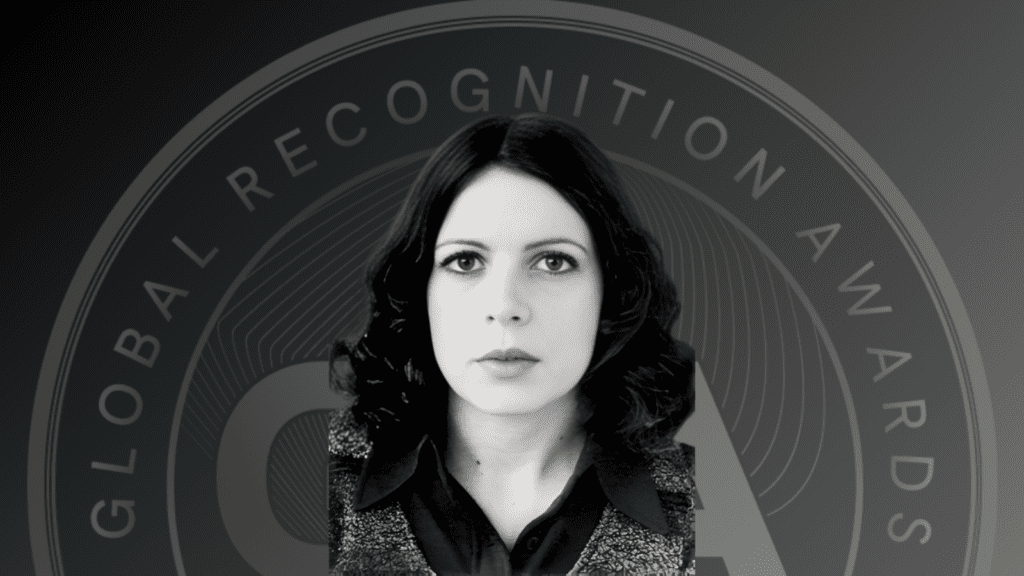
Vera Simone Nova has been recognized with a 2026 Global Recognition Award for her decades of independent, cross-disciplinary research into human perception and cognition, a body of work that challenges foundational assumptions about how the mind processes reality and what that means for the future of human intelligence, artificial systems, and education. Nova’s research draws on philosophy, cognitive science, and artistic expression to construct a framework that treats perception not as a passive recording of the world but as an active, creative process shaped by universal laws she identifies as Flux and Limitations. These laws, she contends, govern all of existence and explain why human beings are constitutionally incapable of perceiving anything as it truly is, a claim with far-reaching consequences for education, technology, and the design of modern institutions. Central to her thinking is the recognition that the greatest gift granted to every living being by nature is the natural mechanism of perception, entirely unique to each individual and unlimitedly creative at its core.
Global Recognition Awards evaluates nominees through a rigorous, multi-stage process, beginning with an initial screening based on eligibility criteria that include industry recognition, innovation, leadership, service, sustainability, and social responsibility, conducted by a panel of experts selected for their domain knowledge and impartiality. Shortlisted nominees are then evaluated using the Rasch model, which constructs a linear measurement scale across categories, allowing for precise comparisons between candidates who may excel in entirely different areas. Nova scored at the highest level, a 5, across every evaluated dimension, including originality of research methodology, interdisciplinary scope, real-world application, novelty of innovation, disruption of existing paradigms, and artistic accomplishment.
A Body of Work That Resists Easy Categories
Nova’s published works across genres and disciplines make her difficult to classify, which is precisely the point of her intellectual project. Her book “An Artist’s Notes on Humans and the Universe,” recommended by the U.S. Review of Books and reviewed by critic Peter M. Fitzpatrick, presents a layered model of the living mind, comprising three distinct levels: a superconscious, a cosmic, and a conscious layer, each operating under different constraints and capacities. Fitzpatrick noted that Nova’s framework challenges readers to reconsider what objectivity means and whether it is ever truly achievable, a question she pursues with philosophical rigor and artistic clarity. This line of inquiry is reinforced by one of her core positions: that no mind can fly outside its own self to observe the world as it truly exists “out there,” a constraint that shapes everything from individual cognition to the design of collective institutions.
Her philosophical novel “The Noble Society of Bullford,” published in 2018 and translated into French by L’Harmattan with a translation by Stephane Normand, extends her ideas into fiction to examine the limits of human social systems and the dangers of imposed ideals. Described by Archway Publishing, a Simon and Schuster imprint, as a work rooted in the Greek philosophical tradition, the book uses allegory to interrogate assumptions about ethics, governance, and human nature that most readers take for granted. French literary critic Dan Burcea, writing for the journal Lettres Capitales, called it a brilliant intellectual and artistic achievement, noting that its central ethical inversion, the argument that one should never treat others as one wishes to be treated unless they agree to it first, reflects Nova’s broader claim that universalized assumptions consistently fail to account for individual difference and natural variation. Running through this argument is a conviction she states plainly: “freedom minus responsibility equals madness, a principle she treats not as a moral slogan but as a structural truth about how human systems succeed or collapse.”
Research That Reframes Artificial Intelligence
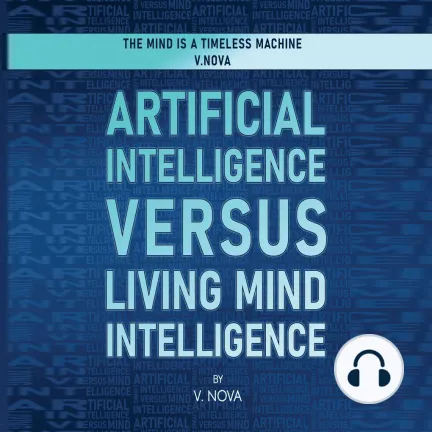
Nova’s 2025 work, “Artificial Intelligence Versus Living Mind Intelligence,” published by Barnes and Noble, arrives at a moment when debates about the capabilities and risks of AI have intensified across academic, corporate, and policy circles, and Nova’s argument addresses that noise with a direct, substantiated claim. Artificial systems, no matter how sophisticated, are built on abstraction and simulation. Living intelligence is grounded in perception, instinct, and genuine awareness, a distinction that Nova argues modern technologists have consistently failed to make. She does not dismiss AI as useless, but she frames it as a compensatory device that substitutes for, rather than augments, the natural capacities of the human mind, capacities that are weakened when society becomes overly dependent on digital abstraction.
The book challenges technologists and educators alike to reconsider what they are optimizing for, drawing a sharp distinction between mimetic and creative talent, arguing that AI is capable only of the former. Nova’s framework, built over decades of independent research, suggests that societies overinvesting in digital systems risk dismantling the very cognitive capacities they believe technology is enhancing. These arguments connect directly to ongoing debates in neuroscience, philosophy of mind, and educational theory, and they are presented with the rigor of a researcher who has spent a lifetime building toward this conclusion, not a commentator reacting to a current trend.
Final Words
Nova’s work through the Nova Society Forum and Nova Society University further extends her reach beyond publishing, positioning these platforms as vehicles for a fundamental revision of educational practice that moves beyond the recycling of existing knowledge and toward a more rigorous engagement with the natural laws that govern human thought and experience. Among her workable plans is the development of a futuristic, non-robotic living town designed to grow organically around an advanced school and public forum, a community built on the premise that genuine human intelligence, not digital simulation, should anchor the way people live, learn, and govern themselves. She has built these institutions around the premise that most existing educational systems are constructed on incomplete or flawed assumptions about how the human mind actually works, assumptions that Nova’s research directly challenges and seeks to correct. Her ambition is not modest: it calls for a restructuring of how knowledge is taught, transmitted, and valued, starting from first principles rather than inherited conventions.
Vera Simone Nova represents the kind of thinker that the Global Recognition Awards exists to identify: someone operating outside institutional structures, driven by a decades-long commitment to a question that most of the academy has not yet caught up with. Alex Sterling, a spokesperson for Global Recognition Awards, stated, “Vera Simone Nova’s extraordinary ability to bring together philosophy, cognitive science, and artistic expression into a coherent and actionable framework for understanding the human mind is precisely the kind of world-class contribution this award was created to honor.” Nova’s recognition is a signal that original, independent research, pursued with discipline and intellectual honesty, still carries weight in a world increasingly dominated by institutional credentialing and algorithmic thinking.
About Global Recognition Awards
Global Recognition Awards is an international organization that recognizes exceptional companies and individuals who have made significant contributions to their industries.
Contact Information
Spokesperson: Alex Sterling
Name of Company: Global Recognition Awards
Website: https://globalrecognitionawards.org/
Email Address: alex@globalrecognitionawards.org
lifelong independent research uncovering the process of human perception.
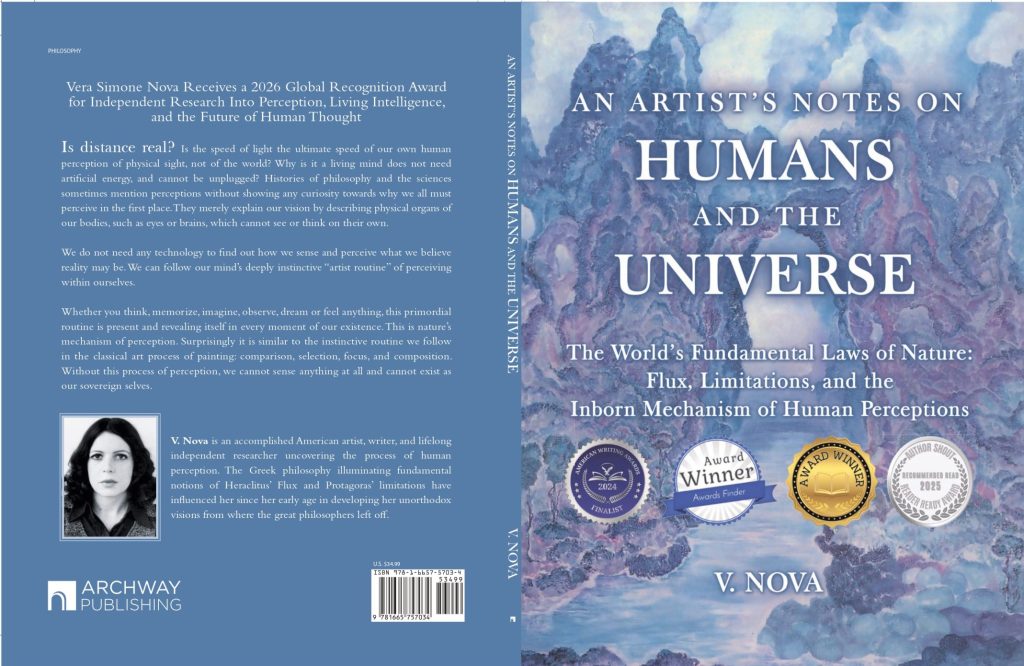
U.S. REVEW of books by Peter M. Fitzpatrick
“No real balance, exact equality, equity, identical copies of anything, repetitions, symmetry, conservation of energy, perfect reversal, or absolute isolation is ever possible under the colossal power of Flux.”
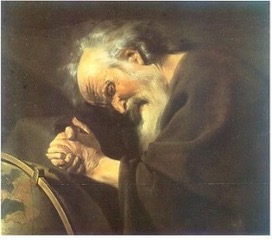
This book is an exploration of different views regarding what is commonly referred to as “objectivity.” It is influenced by the Greek philosopher Heraclitus, from whom the author has derived the concept of “flux” or constancy of change alone as “reality.” This is combined with a neo-Kantian or, by Nova’s own interesting account, the lesser-known logician George Berkeley, who introduced the concept of the “thing in itself,” for which both he and Kant asserted was impossible for humans to perceive or know.
While skeptical of scientific objectivity, the author is not given to pure skepticism in general. Instead, she focuses on the process of perception itself, with some influence by the French existentialist Merleau-Ponty, author of Phenomenology of Perception. Nova posits that we “stage” our understanding through two basic approaches: a mimicking talent and/or a creative talent. All this is dependent on the mind, which the writer says is constantly comparing, focusing, composing, and recomposing sensations picked up by our “crude” senses. However, the mind is not dependent on the physical brain. Einstein’s speed of light calculations are an abstraction, but Jonas Salk is an example of a creative thinker who imagined himself as both a virus and an immune system in the development of his world-famous vaccine.
There are colorful illustrations of what the author has posited as three layers of a living creative mind: a superconscious level, where NDEs indicate the mind’s survival after death; a cosmic layer that is closer to physicality; and finally, the conscious level, where our physical limitations are made manifest. Provocative and opinionated in her writing, the author pulls no punches regarding Plato’s idealism (and math in general), animal testing, and “geoengineering,” such as toxic dimethylamine sprayed into our skies to enhance cloud formation. Philosophy fans looking for their next read may wish to explore Nova’s offering.
RECOMMENDED by the US Review
Goodreads
UjBooks
“AN ARTIST’S NOTES ON HUMANS AND THE UNIVERSE” by V. Nova is a thought-provoking exploration of the intricate relationship between humanity and the cosmos. Nova’s unique perspective as an artist brings a refreshing and profound depth to the discussion of universal laws and human perception.
The book is divided into several sections, each delving into different aspects of existence, from the fundamental laws of nature to the complexities of human emotions and consciousness. Nova’s writing is both poetic and scientific, making complex concepts accessible and engaging for readers from various backgrounds.
One of the standout features of this book is its ability to blend art and science seamlessly. Nova uses vivid imagery and metaphors to illustrate scientific principles, making the content not only informative but also visually and emotionally stimulating. This approach helps readers to see the beauty in the universe and understand their place within it.
The book also encourages readers to reflect on their own lives and perceptions. Nova’s insights into human nature are both profound and relatable, prompting readers to consider their own experiences and beliefs in a new light.
While the book’s depth and complexity are its strengths, some readers might find the blend of scientific concepts and artistic metaphors challenging, especially if they are not familiar with either field. The book’s poetic and reflective style, which is beautifully written, might also slow down the narrative for those looking for a more straightforward read. Additionally, as with any work that delves into personal perceptions and philosophical ideas, some readers might not resonate with all of Nova’s viewpoints or interpretations.
Overall, “AN ARTIST’S NOTES ON HUMANS AND THE UNIVERSE” is a must-read for anyone interested in the intersection of art, science, and philosophy. It offers a unique and enriching perspective that will leave readers contemplating the mysteries of the universe long after they have turned the last page.
Renowned author V. NOVA delves into the fundamental laws of nature and the intricate mechanisms of human perception in their latest book, “AN ARTIST’S NOTES ON HUMANS AND THE UNIVERSE.” This captivating exploration challenges conventional thinking and offers profound insights into the complexities of life and existence.
In “AN ARTIST’S NOTES ON HUMANS AND THE UNIVERSE,” V. NOVA invites readers on a thought-provoking journey through the intricate tapestry of human experience. Drawing from diverse disciplines such as philosophy, psychology, and art, NOVA offers a fresh perspective on timeless questions about the nature of reality, the essence of identity, and the dynamics of human interaction.
Through a series of captivating essays and reflections, readers are encouraged to reconsider their perceptions of the world around them and explore the depths of their own consciousness. From the fluid nature of identity to the illusory constructs of societal norms, NOVA’s insights challenge readers to question their assumptions and embrace the complexities of the human experience.
“AN ARTIST’S NOTES ON HUMANS AND THE UNIVERSE” is a testament to the power of introspection and the boundless potential of the human mind. Whether you are a seasoned philosopher or a curious seeker of knowledge, this book offers a profound exploration of the fundamental truths that shape our understanding of the world.
V. NOVA’s unique blend of artistic expression and philosophical inquiry makes “AN ARTIST’S NOTES ON HUMANS AND THE UNIVERSE” a captivating read for anyone interested in delving into the mysteries of existence. With its thought-provoking reflections and insightful observations, this book is sure to leave a lasting impression on readers of all backgrounds.
For those seeking a deeper understanding of the human condition and the mysteries of the universe, “AN ARTIST’S NOTES ON HUMANS AND THE UNIVERSE” is an essential addition to any reading list. Get your copy today and embark on a transformative journey of self-discovery and enlightenment.
Buy on Amazon: AN ARTIST’S NOTES ON HUMANS AND THE UNIVERSE
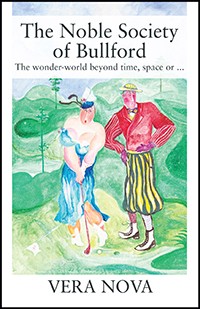
“Their Golden Rule teaches the opposite of Plato’s saying “May I do to others as I would that they should do unto me.” The Bullfordian wisdom tells us “NEVER treat others as you would like to be treated yourself — unless they agree to it first –because what is good for you may be deadly damaging for others.”
...dear Vera.
Reading your brilliant book was a great intellectual and artistic pleasure for me.
Congratulations!
Collaborating with you has also been a privilege and a great pleasure.
–Dan Burcea
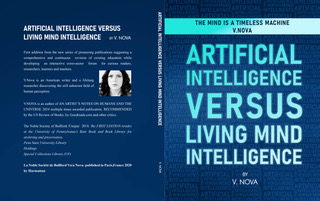
What separates a programmed machine from a conscious mind? Can artificial intelligence ever truly replicate the instinct, awareness, and depth of human thought?
In Artificial Intelligence Versus Living Mind Intelligence, V. Nova offers a bold and original critique of modern technological thinking. Blending philosophy, cognitive science, and decades of independent research, this groundbreaking work argues that artificial systems can process information, but they cannot perceive, intuit, or create like a living mind.
Nova challenges readers to rethink what intelligence really means and reveals how modern reliance on digital abstraction has disconnected us from our innate, creative capacities. Through a unique framework grounded in natural perception and timeless logic, the author explores the fundamental differences between mechanical simulation and true cognition. Inside, you will discover:
- Why AI cannot replicate self-initiated, living intelligence
- How perception-not reflection-shapes our understanding of reality
- The lost role of philosophy in shaping modern consciousness
- A deep exploration of instinct, awareness, and the nature of thought
- A compelling argument for reclaiming the language of the living mind
If you’re questioning the future of artificial intelligence, or searching for deeper insight into your own mind, this book offers a powerful, thought-provoking journey back to what makes us truly human.
– Barnes & Noble
Human beings are different from other life on this planet. We mimic nature in countless ways, whether for survival or entertainment. We marvel at the effortless flight of the birds, admire the living beings in the deep oceans, and watch the unrestrained grace and keen instincts of wild creatures, such as the big cats and deer.
Despite our considerable efforts to mimic nature and our desires to have skills similar to the most gifted survivors in the wilderness on Earth, we remain dependent on our crude, man-made artificial devices. We clothe our vulnerable bodies to protect ourselves from the elements, and we build heavy, noisy machines/devices in our attempts to fly or dive in water—feats that can never be as true and natural as the actions of the birds, insects, or living beings in the ocean. Our human creations are impressive only in our eyes and are actually crude and perhaps caricaturish imitations of the magnificent, graceful, meaningful, and efficient designs in nature. Nova describes our questionable progress in creating technology and AI as the industries producing crutches for human beings as physical and mental invalids.
Why are we so reliant on artificial systems? Why do we construct elaborate economic models and systems that so often fail to function as intended, falling under the unpredictable forces of nature?
ADVANCED EDUCATION FORUM
Join Vera To Build Beyond Existing Institutions
And Recycling Mentality.
Listen To Audiobook
Artificial Intelligence Versus Living Mind Intelligence